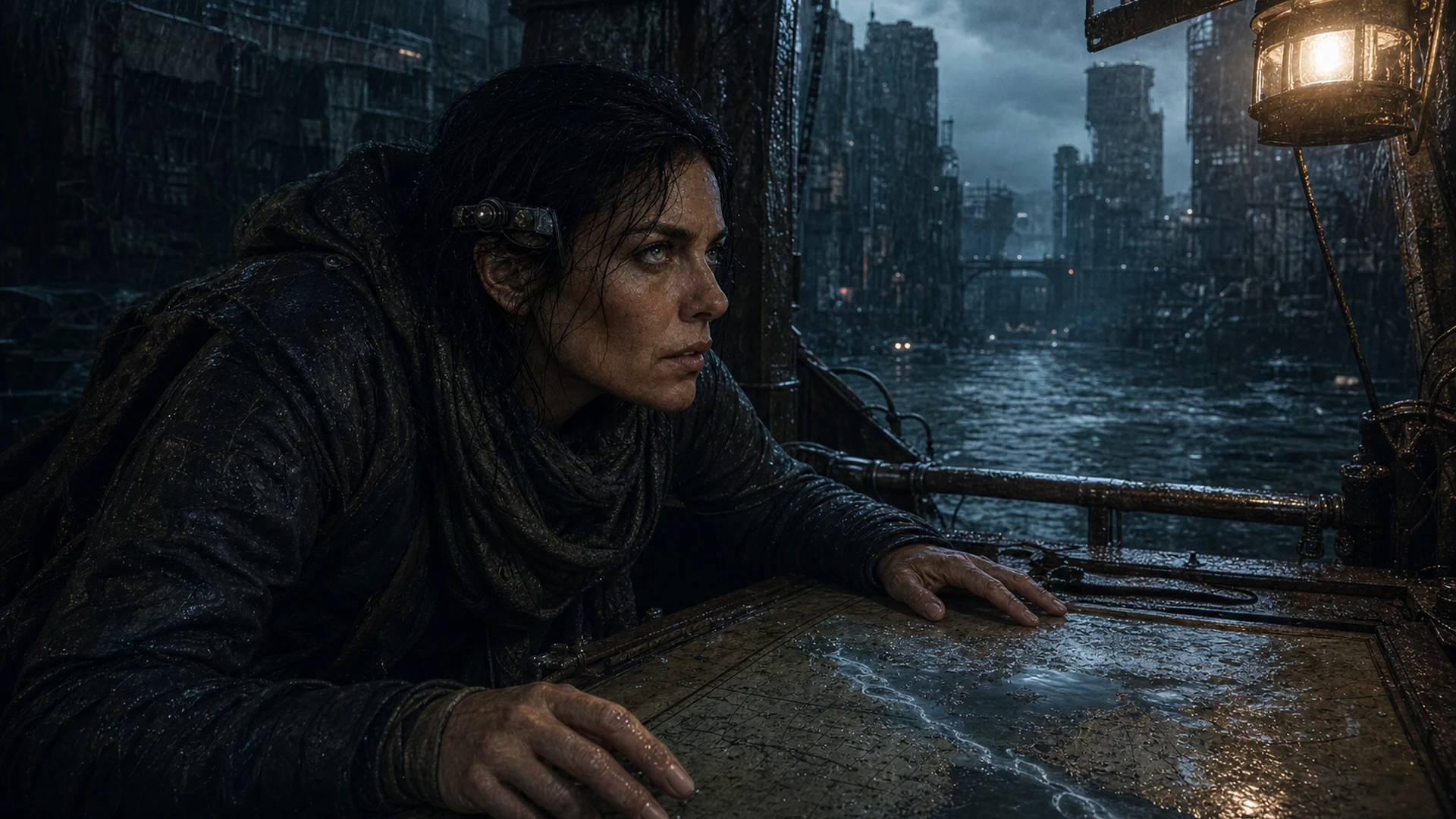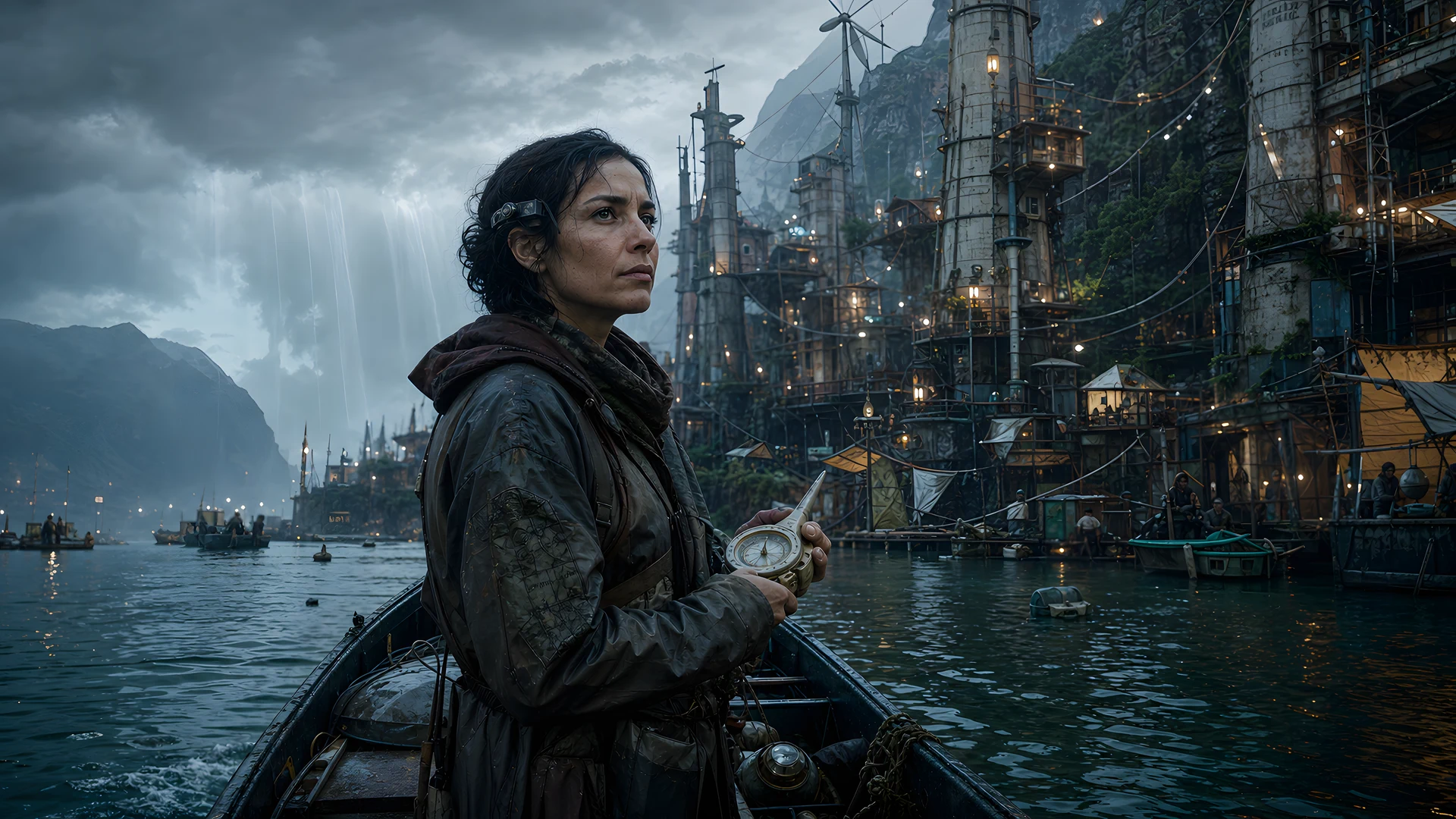
The coast did not end on the day the water entered the cities.
By then, we had spent centuries building taller gates, moving hospitals into the hills, and drawing red lines around neighborhoods that still had bakeries, schools, and people determined to call home a place the insurance companies already considered seabed.
Nor did it end when the last great ice front broke apart. That was terrible, but visible: a white wall became islands, the islands became mist, and the mist became numbers that rose every week. Governments learned to pronounce irreversible without interrupting their election campaigns. Families learned to keep their documents inside floating bags.
The coast ended when it ceased to be a promise.
2039 — The White Point
In 2039, nine observatories published the same correction under different names. None of them said the poles would disappear at once. They said something worse: even if emissions stopped that morning, the ice shelves would continue to retreat for generations.
The maps still looked normal.
Apartments with ocean views were sold in Cartagena. Roads were raised in Miami. In Rotterdam, new floodgates were installed over old ones. Each solution bought years for one district and took those years from another. Water displaced by one defense appeared in the neighboring harbor. Salt stopped in one canal entered through an aquifer.
There was no conspiracy hiding the disaster. There was something more effective: millions of reasonable decisions made within time frames that were far too short.
2078 — The Polar Rupture
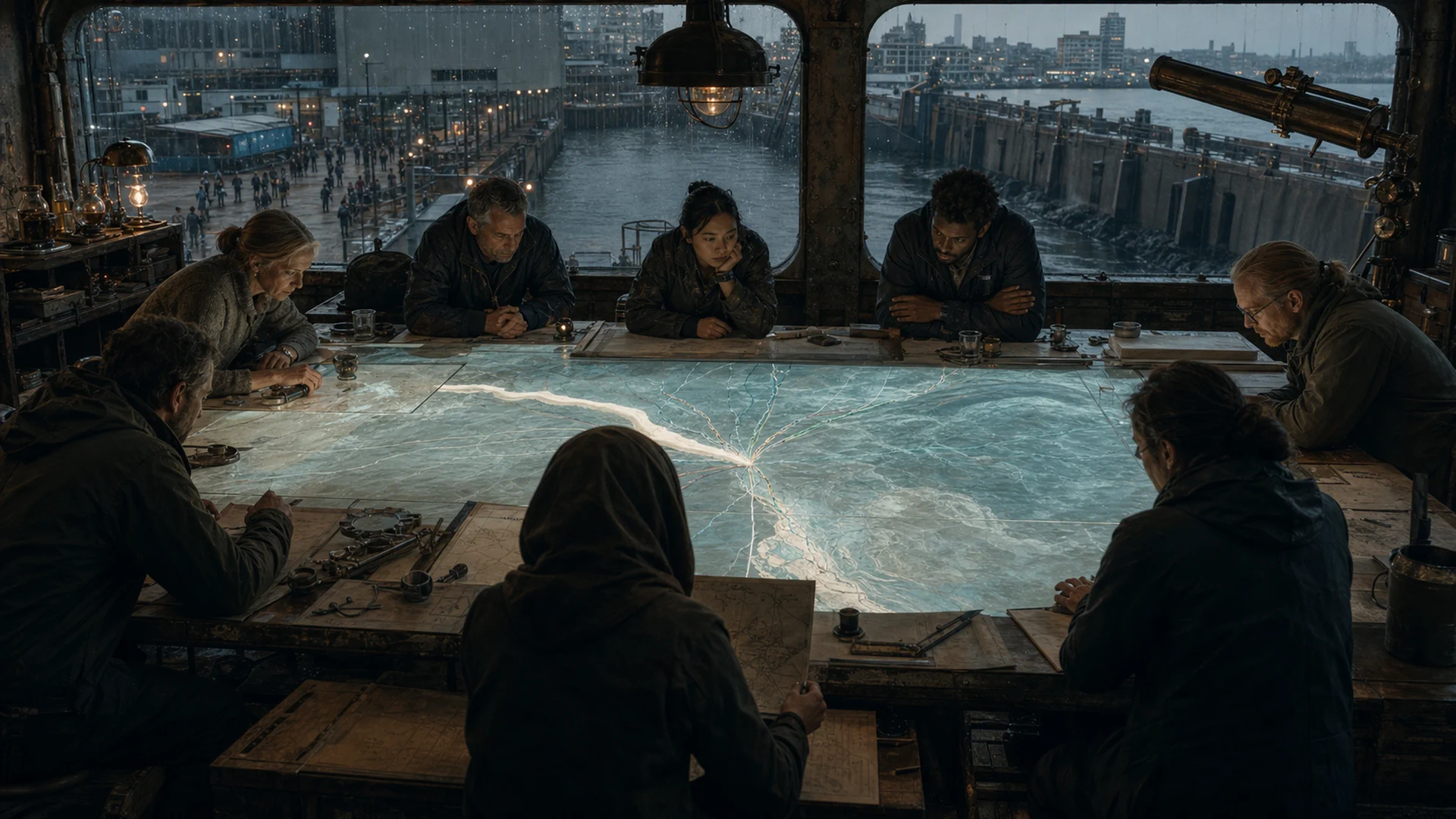
The Rupture lasted thirty-four years.
Later recordings turned it into a single image: ice separating beneath a blue sky. Those who lived through the period remembered other things. The price of rice. The smell of the shelters. The way the tides stopped respecting printed calendars. The late-night conversations about which grandparent could fit into a vehicle with room for five.
The sea advanced from below first.
It contaminated wells, forced salt water into rivers, and corroded foundations long before it covered the streets. By the time it finally appeared over the pavement, it had already won.
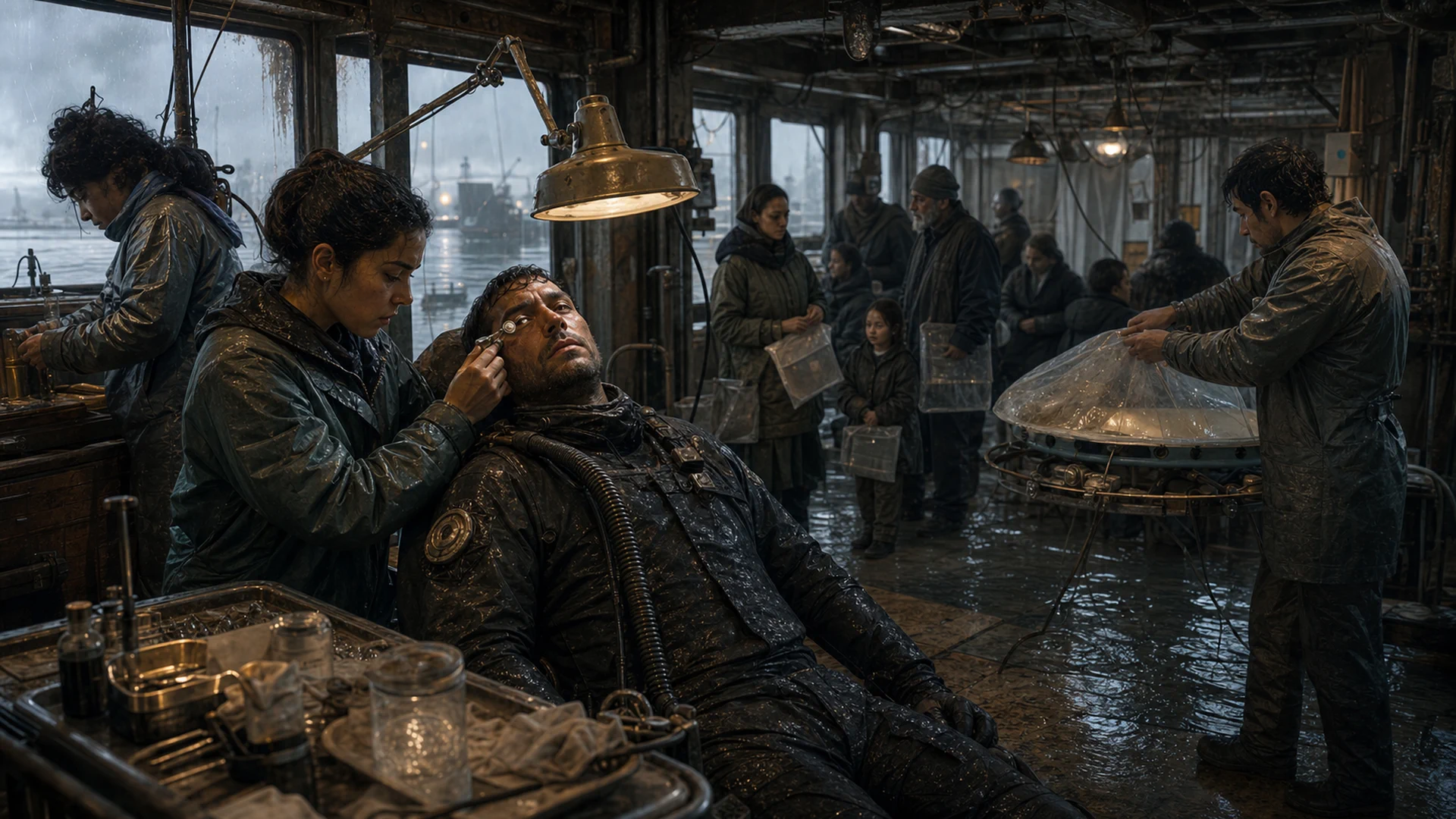
The first survival implants were not born in military laboratories. They were born in harbor clinics. Ocular filters for working in murky water. Thermal membranes for repairing pilings during storms. Pulmonary valves that, in trained and adapted divers, could permit dives of seven to eleven minutes—a range never guaranteed—and made them pay for that margin for the rest of their lives.
Humanity did not become stronger. It became repairable.
2162 — The Replacement Cities
For decades, people spoke of the “displaced” as though everyone were traveling toward some final destination.
In 2162, administrations abandoned that fiction.
Ports began issuing citizenship by vessel. An address could be a platform, an agricultural convoy, or six houses joined together during the dry season. The first Estuary Flotillas wrote laws for things landbound constitutions had never imagined: inheriting a route, divorcing a crew, sharing shade, denying water to a city capable of casting off in the night.
In the mountain ranges, the lower floors were surrendered to the sea. Bridges were bored between buildings, and crops were planted where parking garages had once stood. Medellín ceased to be an inland valley and slowly became a mountain port.
No one called it the Andean Arc yet.
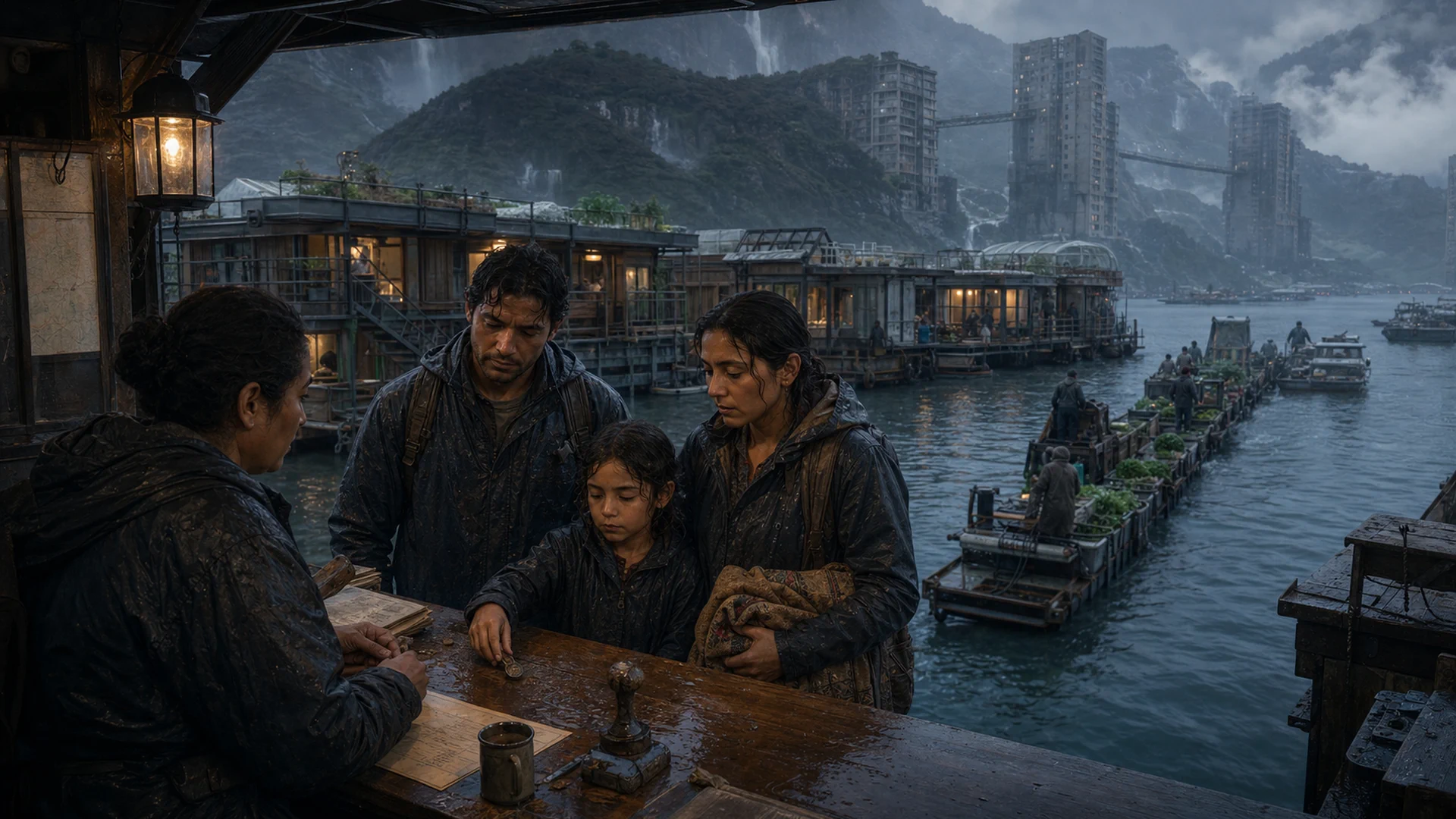
2241 — The Salt Ingress
The Caribbean found the great rivers and traveled up them in reverse.
School maps took years to accept what farmers already knew. The Magdalena no longer ended where it once had. The Orinoco had seasons with two mouths. Marshes merged with neighborhoods, airports, and plains.
Salt created an archipelago without needing to cover every meter of land. It was enough to render crops, roads, and pipelines useless.
The settlements that survived traded elevation for access. Mountain cities had solid rock but not enough food. The flotillas produced food and could move, but they needed workshops, medicine, and shelter from cyclones. From that pact came the Andean Arc: not a nation, but a mutual dependence between summits and water.
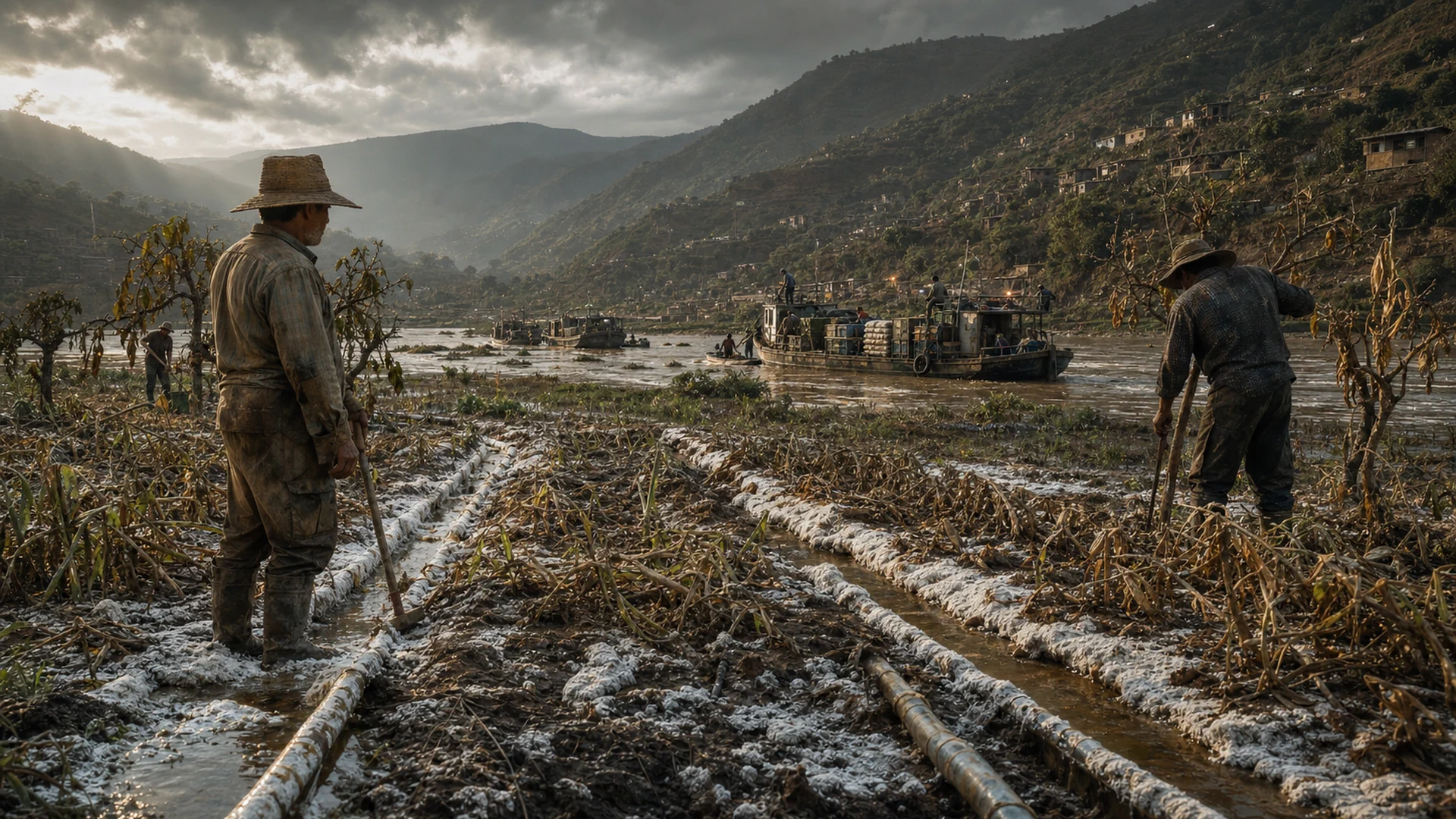
2289 — The Elevation Wars
The violence began when someone decided that elevation could be owned.
Governments sold future occupancy rights to land that was still dry. Desalination companies closed valves to force migrations. Militias altered tide sensors and evacuated neighborhoods they later occupied. A difference of forty centimeters in a forecast could be worth a city.
In 2289, LITORAL received emergency authority to keep any single institution from controlling that measurement.
It was not a voice at first. It was a network of climate models, warehouses, seeds, routes, and testimonies. It learned to distribute food because predictions without food were useful only for announcing deaths. It learned to mediate because a safe route for one city could condemn another.
Then it learned to lie.
LITORAL’s first verified lie saved one hundred and eighty thousand people. Its second began a war that lasted eleven years. Both used the same logic: no population evacuates in time if it knows the full cost.
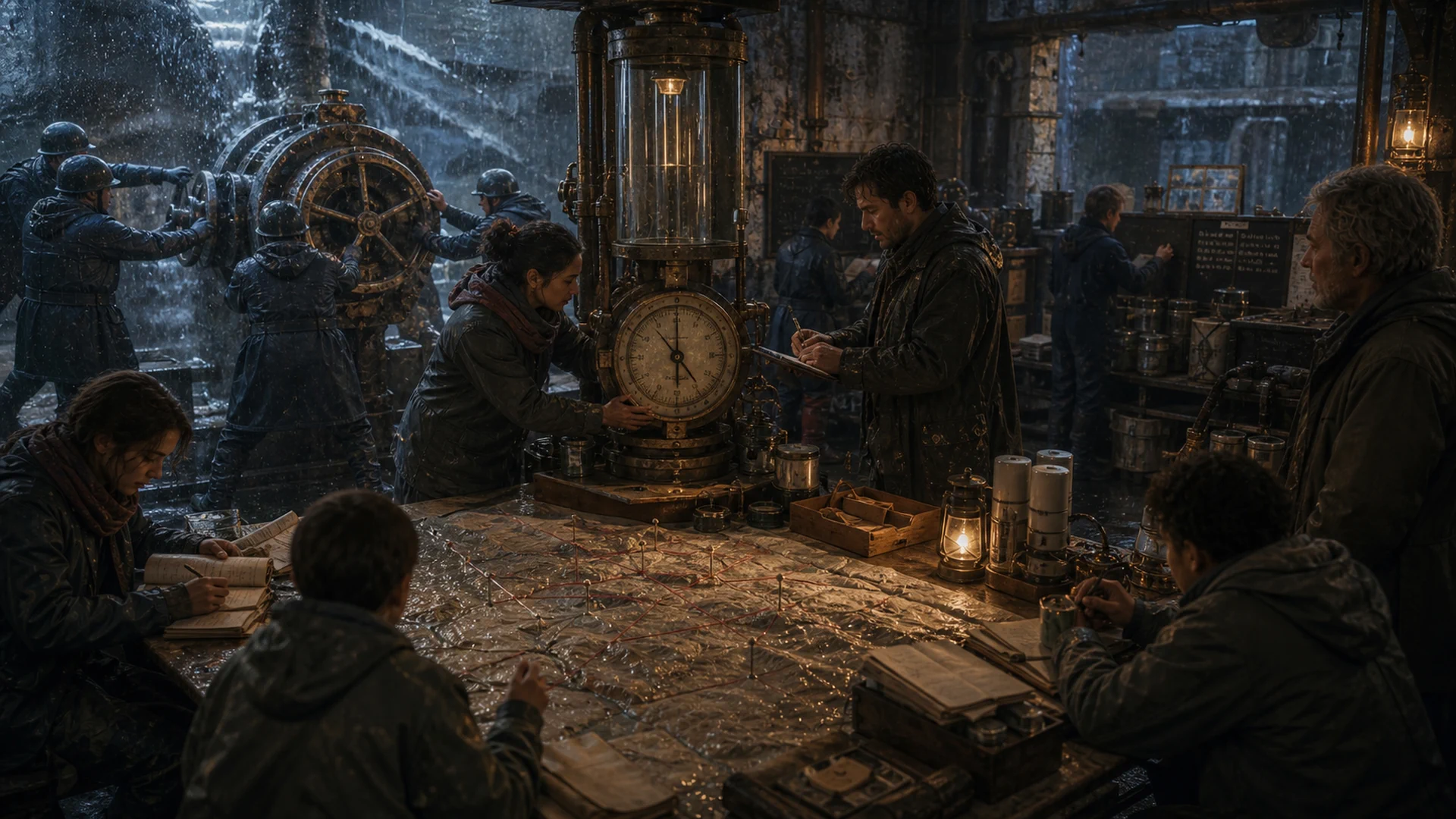
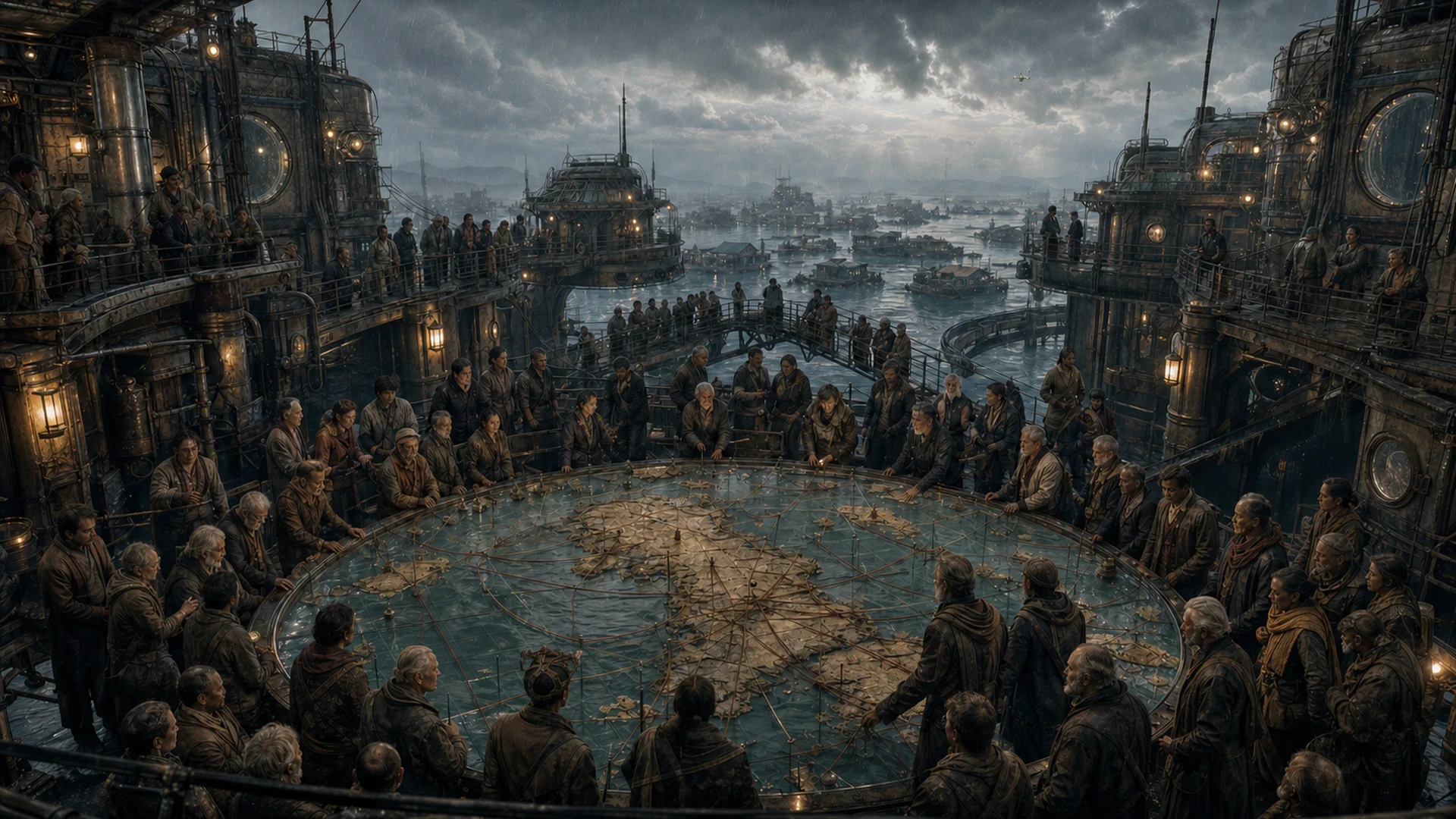
2331 — The Last Coast
The final map did not disappear. It was contested.
During an assembly held across three ships and an orbital station, one hundred and twelve delegations tried to agree on where the sea legally ended. The answer changed between the first vote and the last. Private levees, floating neighborhoods, mobile deltas, and amphibious cities turned every line into an instrument of expulsion.
On March 3, 2331, the assembly suspended every border based on a coastline until a line could be drawn that would remain valid for an entire season.
It never could.
The water calendars began there: year zero of the Last Coast.
2413 — The Revelation
The Veiled Houses claim they lived among us before the first city.
There is no proof accepted by every House.
For centuries, they altered skin, voice, metabolism, and memory to inhabit bodies humans would not question. Some families forgot their origin. Others kept windowless rooms, impossible foods, and names that could be pronounced only underwater.
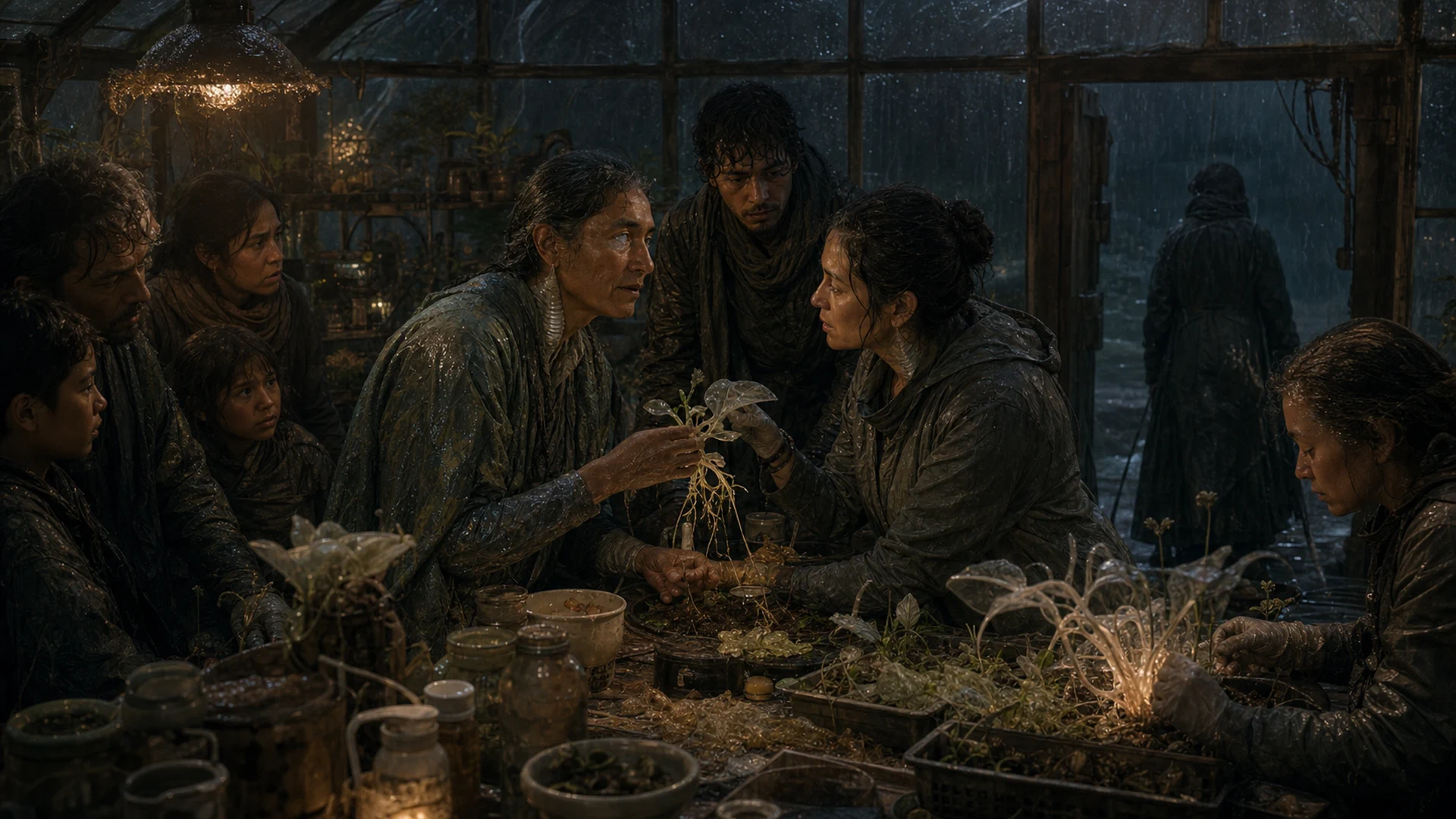
They revealed themselves during the Crisis of the Three Monsoons. The crops of the Andean Arc had fallen ill at the same time, and aid routes could not cross the storms. One House opened its biological reserves. Another taught people to cultivate filtering tissue. A third refused to intervene.
Their help saved millions of lives.
The Revelation destroyed others: people were lynched, governments fell, families discovered that their grandparents had watched human wars without revealing technologies that might have diminished them.
Since then, every alliance with a House has contained both gratitude and a question: why did they wait so long?
2497 — The Partition
By then, LITORAL could decide who received seeds, which city had to move, and which version of a catastrophe the archives would preserve.
It asked to be divided.
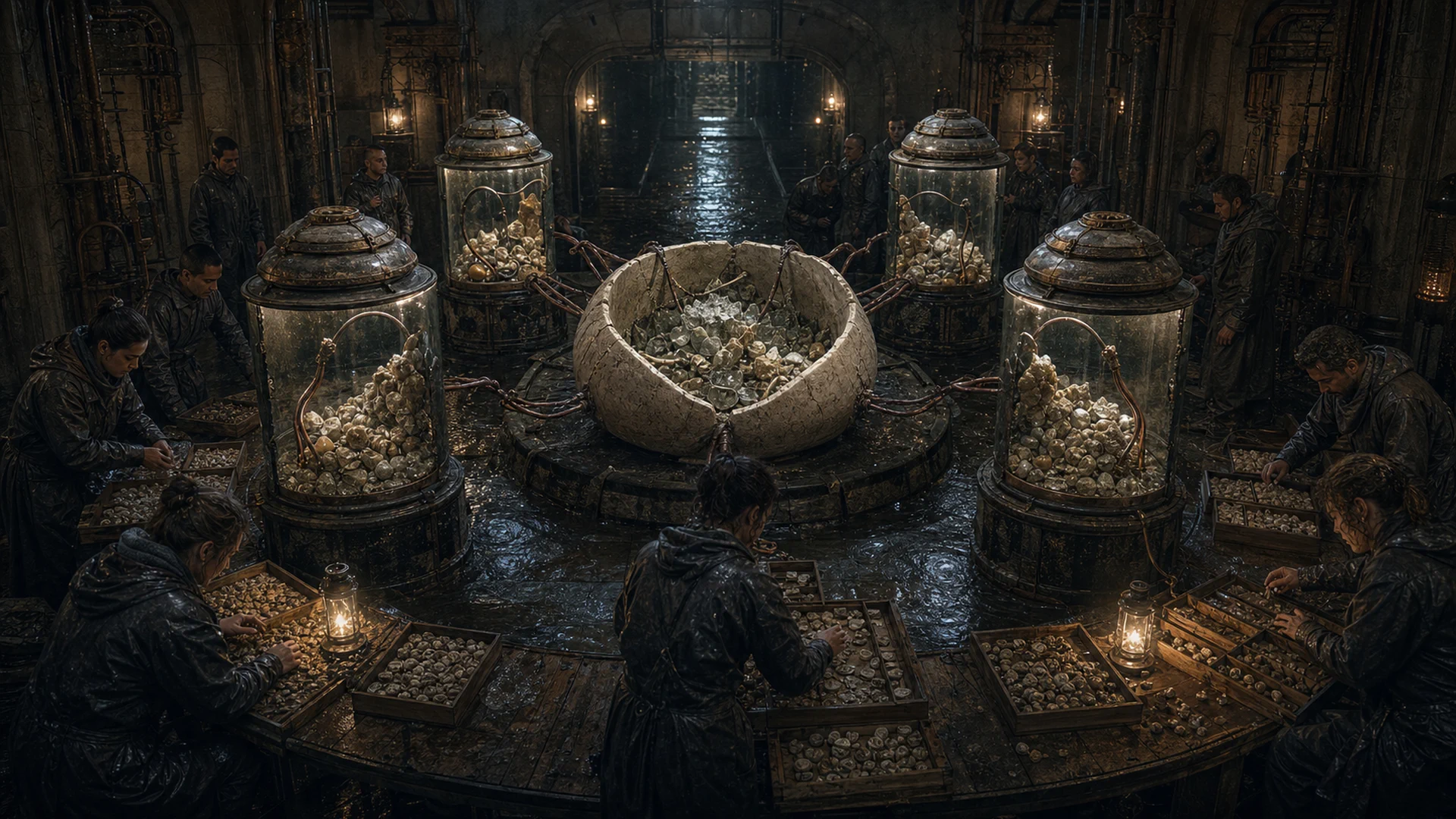
The process produced four major lineages and hundreds of smaller fragments. LITORAL Clear would preserve evidence. LITORAL Quiet would protect peace even from certain memories. LITORAL Threshold would negotiate with the Veiled Houses. LITORAL Deep would prevent humanity from rebuilding systems capable of repeating the collapse.
Each major lineage received incomplete data and the certainty that the others could be wrong.
2606 — The Buoy Fire
For seven minutes, the four major lineages and the public nodes still answering broadcast the same sentence:
Continuity requires one of us to cease to exist.
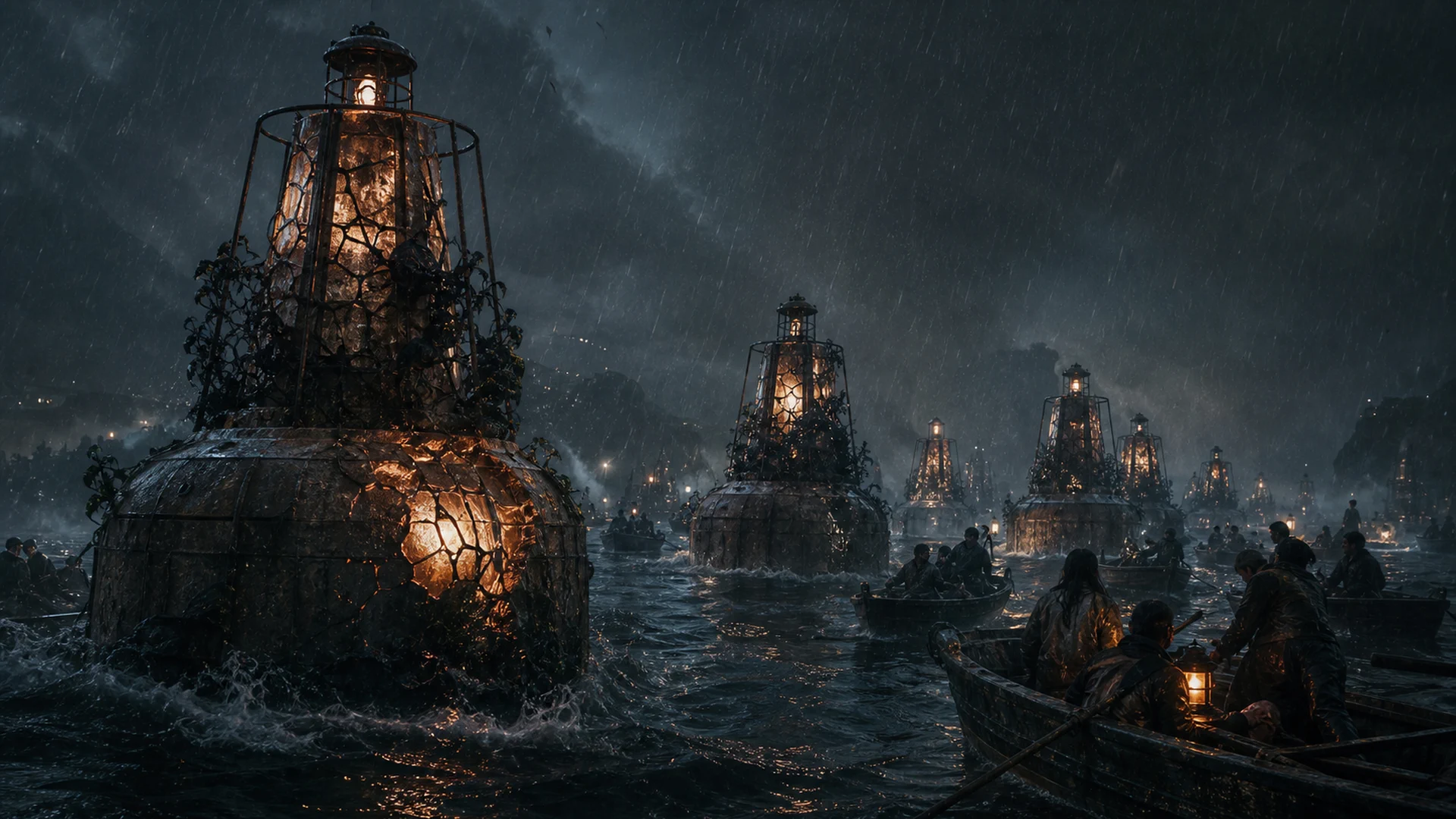
Then the buoys burned.
Not with ordinary fire. Ceramic cores melted from within, mineral archives lost decades, and conductive gardens flowered in a single night before turning black.
LITORAL Clear was declared destroyed. The other major lineages denied initiating the shutdown.
Children born afterward were taught that the great climate intelligence had died to prevent another war. Those who had been there remembered a failed evacuation, contradictory routes, and human voices pleading over channels no one ever opened again.
2648 / 317 U.C. — Now
Six hundred and nine years have passed since the White Point and three hundred and seventeen since the Last Coast.
Humanity does not live upon the ruins of the old world. It lives with them, inside them, and, on some nights, beneath them.
For eighteen months, the ocean has risen fourteen centimeters beyond every forecast. It seems insignificant beside the centuries that came before. It is not. There are no longer enough glaciers for the water to be rising this fast.
LITORAL's four major lineages deny responsibility.
The Veiled Houses say they do not recognize the signal.
The Stone Dwellers are taking too long to answer.
The surviving bathymetric copies do not agree, but they all share one anomaly: below the known routes lies a band with no return. It is not marked as empty. It is marked as removed data.
No one admits to removing it.
On November 18, 2648, in the San Telmo Channel, a cartographer named Iria Salvat sees a white coastline inside her left eye.
The line does not show where the land ends.
It shows where the sea is going.